Top 10 Vehicle Power Inverters You Should Consider?
In the realm of mobile power solutions, a vehicle power inverter plays a crucial role. According to John Smith, an industry expert, “A quality power inverter transforms your vehicle into a portable power station.” With the rise of technology, having the right vehicle power inverter is essential for travelers and adventurers. Whether it's charging devices during a road trip or powering small appliances at a campsite, these devices serve diverse needs.
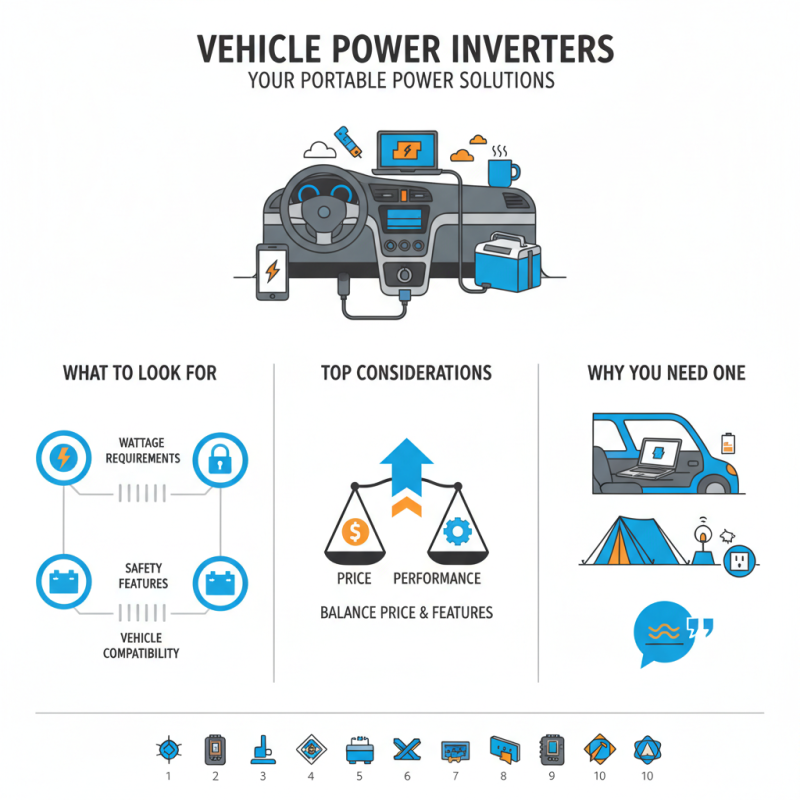
However, not all inverters are created equal. Inverters come with various features, capacities, and prices. Some may fall short in reliability or efficiency. Selecting the right one might seem overwhelming. You'll need to consider wattage requirements, safety features, and compatibility with your vehicle. Each choice reflects a balance between price and performance.
Choosing a vehicle power inverter can be tricky. Higher wattage means more versatility, yet comes with a higher price tag. Products vary widely, and some may offer features you don’t need. To find the best fit, understanding your unique power needs is vital. Consider these factors carefully; they will influence your experience on the road.
Definition and Functionality of Vehicle Power Inverters
Vehicle power inverters are devices that convert DC power from a vehicle's battery into AC power. This conversion allows you to use regular household appliances while on the road. They come in various sizes and capacities, making them versatile for different applications. The global market for power inverters is projected to grow significantly, reaching an estimated $12 billion by 2025.
Many drivers are unaware of the limitations of their inverters. For instance, using too many appliances at once can overload the inverter. Overloading can lead to serious damage, which is often irreversible. Additionally, frequent use without adequate cooling can shorten the unit’s lifespan. Understanding the capacity of your inverter is crucial, as 70% of users often underestimate their power needs.
Tips: When selecting an inverter, check the wattage of your devices. Consider a unit that has at least 20% more capacity than needed. This buffer helps prevent overheating and damage. Always ensure your vehicle's battery can handle the additional load. If you’re unsure, consult a professional.
Remember, the understanding of inverter functionality is essential for safe usage. Many users do not read the manual thoroughly or overlook important details, which can be detrimental. Take the time to familiarize yourself with features and settings. This understanding can greatly enhance your experience while using power inverters on the road.
Top 10 Vehicle Power Inverters You Should Consider
| Model | Power Output (Watts) | Number of Outlets | Input Voltage (DC) | Wave Type | Weight (lbs) |
| Model A | 300 | 2 | 12 | Modified Sine Wave | 3.5 |
| Model B | 400 | 3 | 12 | Pure Sine Wave | 4.0 |
| Model C | 600 | 4 | 24 | Modified Sine Wave | 5.5 |
| Model D | 800 | 2 | 12 | Pure Sine Wave | 7.0 |
| Model E | 1000 | 2 | 12 | Pure Sine Wave | 9.0 |
| Model F | 1500 | 3 | 24 | Modified Sine Wave | 10.0 |
| Model G | 2000 | 4 | 12 | Pure Sine Wave | 12.0 |
| Model H | 2500 | 3 | 24 | Modified Sine Wave | 15.0 |
| Model I | 3000 | 4 | 12 | Pure Sine Wave | 20.0 |
| Model J | 3500 | 3 | 24 | Modified Sine Wave | 25.0 |
Key Factors to Consider When Choosing a Power Inverter
When selecting a vehicle power inverter, several key factors should be considered. First, the inverter’s output wattage is crucial. Determine the total wattage needed for your devices. A common mistake is underestimating power requirements. Ensure the inverter can support all devices simultaneously.
Next, think about the inverter type. Modified sine wave inverters are often cheaper but may not work well with sensitive electronics. Pure sine wave inverters offer better performance but at a higher cost. Evaluate your needs carefully.
Consider portability and size. A compact inverter fits well in a vehicle. However, it might sacrifice power. Balance size and wattage in your decision. Also, check the inverter’s safety features. Overload protection and short circuit prevention are essential. They protect both devices and the inverter itself.
Tips: Always read user reviews before purchasing. Real-world experiences can reveal hidden flaws. Additionally, don’t overlook warranty details. An inverter might seem perfect but could fail prematurely. Evaluate all aspects thoroughly.
Top 10 Vehicle Power Inverters Based on Performance and Features
When choosing a vehicle power inverter, performance and features are key. Look for inverters that offer high wattage output. This ensures you can run multiple devices at once. Some inverters may overheat during heavy use. It’s essential to check reviews for reliability under stress.
Consider the number of output ports. Multiple ports allow charging various devices simultaneously. Some models even have USB ports, which are great for smartphones and tablets. Be aware that more ports can result in lower power availability. Check specifications carefully to ensure they meet your needs.
Tips: Look for inverters with safety features. Fuses and overload protection can save your devices from damage. Compact designs are easier to store, but make sure they don’t compromise performance. Also, think about portability. The best inverters may be heavier due to more robust components. Balance the size and weight based on your travel plans. An inverter that meets your needs will increase convenience during your journeys.
Top 10 Vehicle Power Inverters Performance Comparison
Comparison of Price Ranges for Popular Power Inverter Models
When choosing a power inverter for your vehicle, price ranges can vary significantly. Most models range from $50 to over $300. Budget-friendly models often have lower wattage. They typically produce between 150 to 400 watts. This is sufficient for charging small devices. However, larger appliances need higher wattage. For example, a model offering 1000 watts can cost around $200.
Middle-tier models tend to offer better performance. Their prices range from $150 to $250. These inverters often feature better cooling systems and higher output. Some can handle up to 2000 watts, making them suitable for larger devices. They also offer safety features, which are essential for user protection. Despite their higher price, these models often provide good value.
Tips: When selecting an inverter, consider your power needs. Always check the wattage requirements of your devices. It's wise to buy an inverter with a capacity that exceeds your needs. This approach provides flexibility and ensures stable performance. Keep in mind that more expensive models may offer better efficiency. However, assess your budget carefully. Balancing cost and functionality is key.
User Reviews and Reliability Ratings of Selected Power Inverters
Choosing the right vehicle power inverter can be overwhelming. User reviews provide valuable insights into performance and reliability. Many users highlight how certain models excel in various situations. They often share experiences about charging devices on long trips. Others focus on efficiency and heat generation during operation.
A common theme in reviews is user satisfaction with durability. Some inverters break down under heavy use. This can lead to reliability issues down the road. Users also mentioned that size matters. A compact design is crucial for space-limited vehicles. Some people find it challenging to fit larger units in their cars.
Product ratings often reflect real-world use. A few inverters received mixed feedback for their power ratings. Some owners wish for more consistent performance. Others appreciate ease of use and straightforward setup. Not every inverter meets the expectations from the specifications. Prospective buyers should carefully consider these reviews to determine their needs. This decision affects their travel experience directly.