What is a Solar Provider and How to Choose One?
Choosing a solar provider can be daunting. With so many options available, how can you select the best one for your needs? Experts in the solar industry highlight key factors. "The right solar provider can transform your energy future," says Lisa Martinez, a notable figure in solar technology.
Understanding the landscape of solar providers is essential. Each company offers different services, pricing, and warranties. Researching these aspects directly impacts your long-term satisfaction. Taking time to compare options helps avoid regret later. You might learn that the lowest price may not always mean the best service.
Additionally, ensure the provider is reputable. Customer reviews and ratings are crucial indicators. Speaking with past customers provides real insights into their experiences. An unreliable solar provider could lead to wasted time and money. Reflecting on these factors can yield better choices. Ultimately, trust your instincts and ask many questions. The decision should empower you, not overwhelm you.

What Defines a Solar Provider in the Renewable Energy Market
In the renewable energy market, a solar provider plays a critical role. This entity is primarily responsible for solar panel installation, maintenance, and consulting. They must understand local regulations and available incentives. Expertise in the latest solar technology is essential. Consumers often rely on solar providers for guidance through the complex process of adoption.
Choosing the right solar provider goes beyond just price considerations. Experience and reviews matter significantly. Potential clients should investigate previous projects to gauge reliability. Some companies might overpromise results, leading to disappointment. It's vital to ask about warranties and service agreements since quality can vary widely. The decision can impact your home’s energy efficiency for years.
Not all solar providers prioritize customer education. Some focus on sales volume rather than client needs. Clients should seek providers who are transparent about their equipment and processes. A thorough consultation can reveal if a provider is genuinely invested in delivering tailored solutions. However, navigating this landscape can be overwhelming, especially with so many options available.
Solar Provider Market Share by Technology Type
This chart represents the market share of different solar panel technologies among solar providers in the renewable energy market. Monocrystalline panels have the largest share, followed by polycrystalline and thin-film technologies.
Key Factors to Consider When Choosing a Solar Provider
Choosing a solar provider requires careful thought. Solar energy is a significant investment. To find the right company, consider the following key factors.
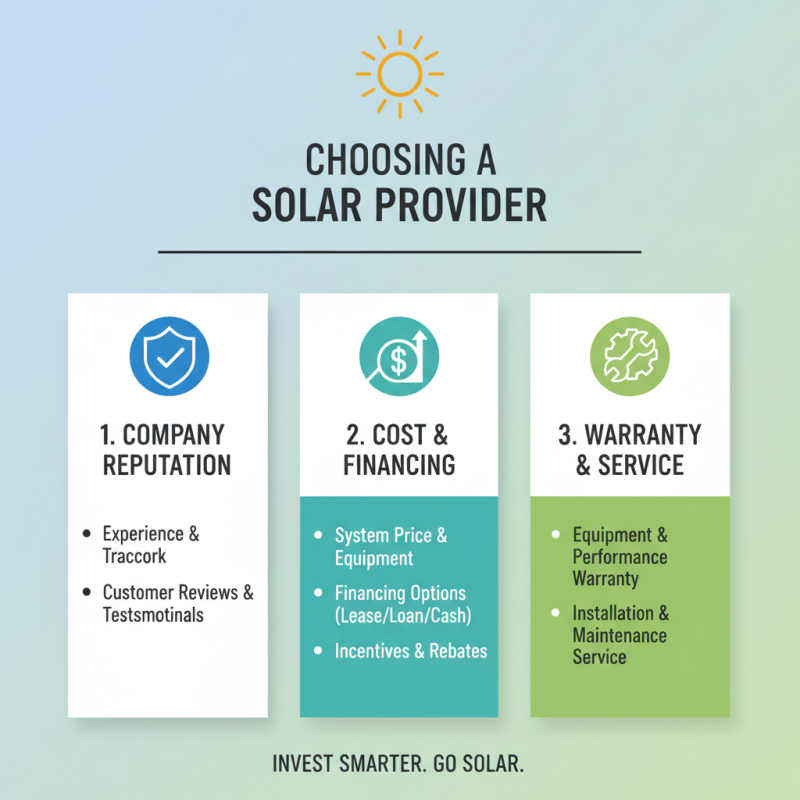
Start with experience. A solar provider's years in business matter. Look at their track record with installations. Check customer reviews. Not all providers are equally reliable. Some may lack proper credentials or support. A brief consultation can reveal their level of expertise.
Next, consider financing options. Many providers offer different payment plans. Understand your budget. Some offer flexible financing that may suit you better. Others may require hefty upfront costs. Be wary of hidden fees. Transparency is crucial.
Finally, evaluate customer service. Responsiveness is key. A great solar provider should answer questions promptly. Check if they offer ongoing support after installation. Issues may arise, and assistance is essential.
Tips: Always read the fine print in contracts. Ask for references from previous clients. Trust your instincts when something feels off. Choosing a solar provider can feel daunting, but it’s essential for your energy future.
Understanding Certifications and Licenses of Solar Providers
When choosing a solar provider, understanding their certifications and licenses is crucial. Various organizations provide certifications that indicate a company meets certain industry standards. For instance, the North American Board of Certified Energy Practitioners (NABCEP) is known for its rigorous certification process. Companies that achieve NABCEP certification often demonstrate a deeper level of expertise and reliability, yet not all reputable providers have this badge.
Licenses vary across states and countries. In the U.S., many states require solar providers to hold specific contractor licenses. These licenses guarantee that installers comply with local regulations and building codes. However, some providers may operate without the necessary licenses, creating risks for customers. In fact, a recent industry report revealed that about 20% of solar providers lack proper licensing in certain regions. This can lead to shoddy installation and potential issues down the line.
Potential customers should also look for other credentials, such as membership in industry associations. A report by the Solar Energy Industries Association highlighted that companies with these affiliations are more likely to offer high-quality services. Despite this, consumers often overlook these aspects. It's essential to do your research and ask for documentation of any claimed certifications. Don't settle for promises; ask for proof.
What is a Solar Provider and How to Choose One? - Understanding Certifications and Licenses of Solar Providers
| Certification/License |
Issuing Authority |
Importance |
Validity Duration |
| NABCEP PV Installer Certification |
North American Board of Certified Energy Practitioners |
Demonstrates expertise in solar installations |
3 years |
| State Electrical License |
State Government |
Legal requirement for electrical work |
Varies by state |
| ISO 9001 Certification |
International Organization for Standardization |
Quality Management Systems |
3 years |
| Solar Rating and Certification Corporation (SRCC) Certification |
SRCC |
Performance of solar thermal products |
3 years |
| Home Improvement Contractor License |
State Government |
Required for residential solar installations |
Varies by state |
Evaluating Customer Reviews and Testimonials for Solar Providers
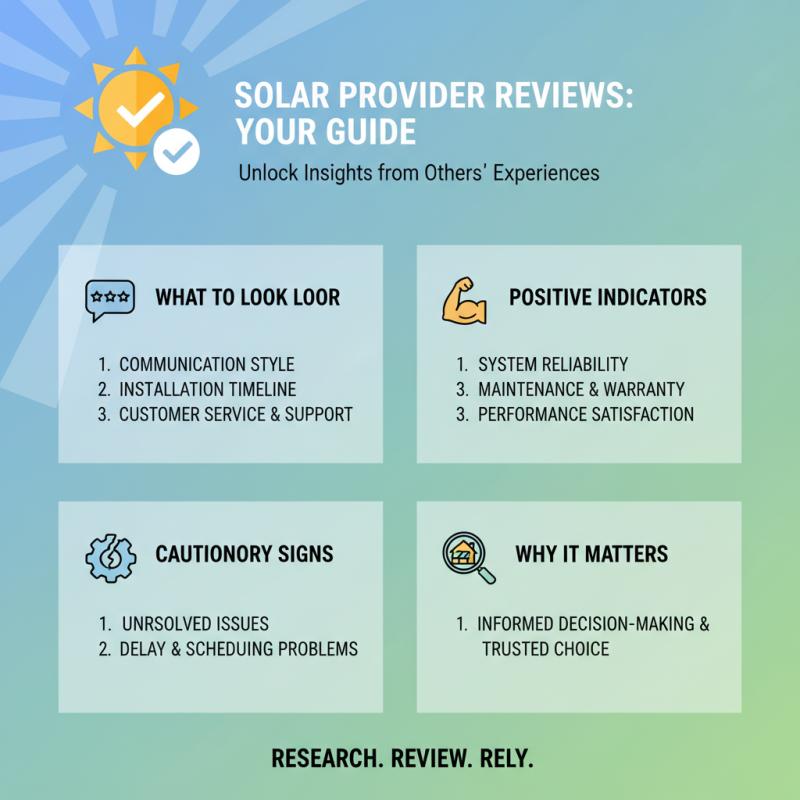
When evaluating solar providers, customer reviews and testimonials hold significant weight. Potential customers can gain insights from others' experiences. A review may reveal how a company communicates. Look for feedback about installation times, customer service, and system performance. Positive comments about reliability and maintenance support can be telling. Negative reviews might indicate issues that could impact your choice.
Pay attention to patterns in the testimonials. If multiple reviewers mention poor communication, take it seriously. On the other hand, a consistent focus on quality service is a good sign. Remember, even happy customers may share some dissatisfaction. One bad experience in a sea of good ones might not be a dealbreaker. However, it raises questions about consistency and the company’s responsiveness.
Consider the source of the reviews, too. Online platforms are useful, yet sometimes skewed. Personal anecdotes from friends or family can provide a balanced view. Don't ignore negative experiences; they can highlight potential pitfalls. Choose a solar provider based on a blend of positive sentiments and constructive feedback. This approach can guide you to a reliable choice in your solar journey.
Comparing Cost and Financing Options Among Different Solar Providers
When selecting a solar provider, cost and financing options are crucial factors. Pricing can vary significantly among different providers. Some may offer competitive initial rates but lack favorable long-term agreements. It's essential to analyze what each provider includes in their pricing.
Understanding financing options is equally important. Many providers offer loans, leases, or power purchase agreements. These choices affect your upfront costs and long-term savings. A lease may seem appealing, but it often lacks ownership benefits. Financing can seem complex. You should seek out options that suit your budget and financial goals.
Consider hidden fees, too. Some providers have installation costs, permits, and maintenance fees that can add up. Transparency is important. Ask questions and read contracts carefully. A cheap initial quote may lead to higher overall costs. Reflect on the value each provider brings before making your decision.