
How to Choose a Solar System for Electricity?
Choosing a solar system for electricity starts with your actual demand, not a panel’s advertised wattage. Global solar growth shows that the technology is mature, but system quality still depends on site conditions. IRENA’s Renewable Capacity Statistics 2025 reports that solar power added about 452 gigawatts worldwide in 2024. That figure is impressive. It does not mean every roof deserves the same design.
A reliable assessment examines annual consumption, daytime loads, roof direction, shading, local weather, and available installation space. A 400-watt panel under heavy afternoon shade may produce less than expected. NREL’s PVWatts tool helps estimate production using location, system size, tilt, and losses. Its results are estimates, not promises. Include inverter efficiency, battery round-trip losses, degradation, maintenance, and grid-connection costs. These details can change the payback period significantly.
The right system may combine rooftop solar, a battery, and grid access. It may also be a simpler grid-tied system. IEA’s Renewables 2024 analysis identifies solar PV as the leading source of new renewable capacity growth, yet household decisions remain personal. Electricity tariffs, export rules, backup needs, and financing can outweigh headline equipment prices. A large battery is not automatically wise. Sometimes, shifting laundry or water heating into sunny hours delivers better value. A basic calculation can mislead. Compare at least three professional proposals, request production assumptions, and check installer credentials and warranties. Reconsider the design after examining one year of electricity bills. Good solar planning is less about buying the biggest system and more about matching generation to real life.
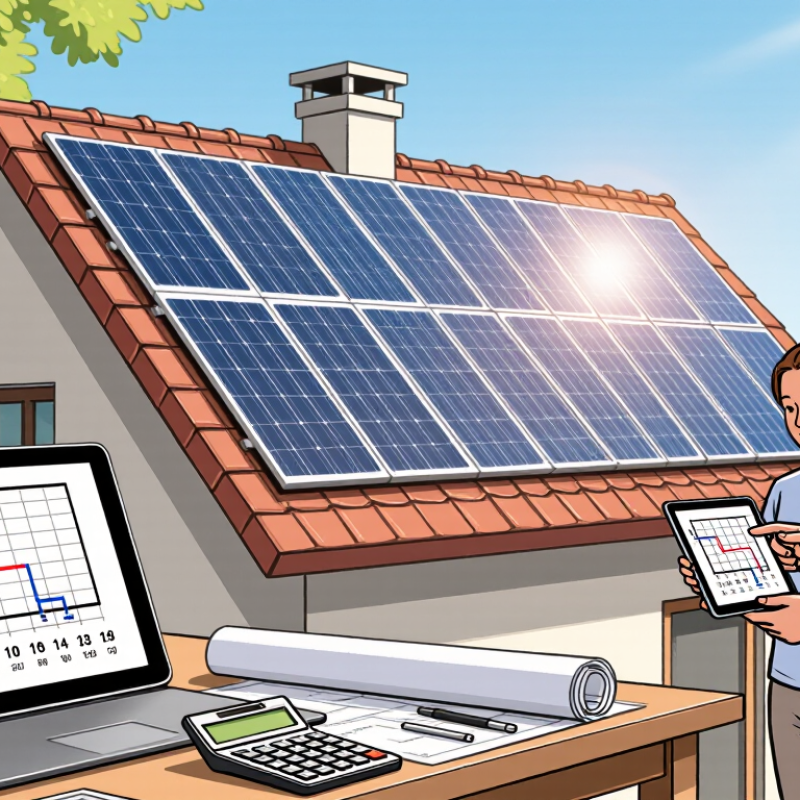
Define Your Electricity Needs and Consumption Patterns
Choosing a solar system starts with observing how electricity is actually used, not guessing from monthly bills. Record twelve months of bills and note daily consumption, peak demand, and seasonal changes. A summer bill may hide short, intense loads from air conditioning. Winter heating may run for hours. List each appliance, its wattage, operating hours, and starting surge. Smart meters and plug-in monitors can improve accuracy. Small details matter.
Separate essential loads from flexible ones. Essential items may include refrigeration, lighting, internet equipment, or approved medical devices. Flexible loads include laundry, water heating, and electric vehicle charging. Calculate daily energy use in kilowatt-hours and peak demand in kilowatts. If evening consumption is high, battery storage may have greater value. If most usage occurs during daylight, direct solar production may reduce grid purchases more effectively. Battery capacity should also match the required backup period.
Usage patterns rarely stay fixed. Guests arrive, appliances age, and work schedules change. My own estimates can be wrong when habits shift. Leave reasonable capacity, but avoid paying for equipment that will sit idle. An experienced, licensed installer should check roof shading, wiring, ventilation, and local electrical requirements. Ask which assumptions shape the proposal and request production estimates for cloudy months. A careful review of actual consumption creates a more dependable system design.
How to Choose a Solar System for Electricity? - Define Your Electricity Needs and Consumption Patterns
The estimates below use typical residential appliance ratings. Actual consumption varies by appliance efficiency, operating temperature, season, and user habits. Daily energy is calculated as: Power (W) × Operating Hours per Day ÷ 1,000.
| Load Category | Typical Appliance | Rated Power (W) | Quantity | Use per Day (h) | Daily Energy (kWh) | Usage Pattern |
|---|---|---|---|---|---|---|
| Cold Storage | Refrigerator | 150 | 1 | 8.0 equivalent | 1.20 | Cycles throughout the day; startup surge may be higher than running power. |
| Lighting | LED Light Bulbs | 10 | 8 | 5.0 | 0.40 | Mostly used after sunset, with lower daytime demand. |
| Communication | Wi-Fi Router | 12 | 1 | 10.0 | 0.12 | Often operates continuously, including overnight. |
| Entertainment | LED Television | 80 | 1 | 4.0 | 0.32 | Usually concentrated in the evening. |
| Computing | Laptop Computer | 60 | 1 | 2.0 | 0.12 | Flexible load that can be scheduled during daylight hours. |
| Ventilation | Ceiling or Pedestal Fan | 50 | 2 | 6.0 | 0.60 | Demand is generally higher during warm afternoons and evenings. |
| Water Supply | Water Pump | 750 | 1 | 0.5 | 0.38 | Intermittent high-power load; best scheduled during peak sunlight. |
| Cooking | Microwave Oven | 1,200 | 1 | 0.25 | 0.30 | Short-duration load with relatively high instantaneous power. |
| Laundry | Washing Machine | 500 | 1 | 0.5 | 0.25 | Can normally be shifted to late morning or early afternoon. |
| Cooling | Room Air Conditioner | 1,000 | 1 | 4.0 | 4.00 | Large seasonal load; actual demand depends strongly on temperature and insulation. |
| Estimated Daily Consumption Without Air Conditioning | 3.69 kWh | Essential and standard household loads | ||||
| Estimated Daily Consumption Including Air Conditioning | 7.69 kWh | Typical warm-weather scenario | ||||
Solar System Sizing Scenarios
| Usage Scenario | Daily Energy Need (kWh) | Recommended PV Capacity (kW) | Suggested Inverter Rating (kW) | Usable Battery for 1-Day Backup (kWh) | Best Fit |
|---|---|---|---|---|---|
| Essential Loads | 2.0–3.0 | 0.8–1.2 | 2.0–3.0 | 2.5–3.8 | Lighting, refrigeration, internet, small electronics, and limited water pumping. |
| Standard Household Use | 3.7–5.0 | 1.3–1.8 | 3.0–5.0 | 4.6–6.3 | The listed household loads without frequent air-conditioner operation. |
| High-Use Household with Cooling | 7.0–9.0 | 2.5–3.5 | 5.0–7.0 | 8.8–11.3 | Homes using air conditioning for several hours, especially where evening backup is important. |
Sizing assumptions: approximately 4.5 peak-sun-hours per day, 80% overall system efficiency, and a 25% design reserve. Battery values represent usable energy; the installed battery capacity should be higher depending on battery chemistry and allowable depth of discharge.
Related Posts
-
How to Choose China Top Solar System Electricity Suppliers?
-

10 Solar Power Buying Tips for Global Buyers?
-

China Top Power Solar Manufacturers for Global Buyers?
-
10 Best Solar Electricity Companies for Global Buyers
-
10 Solar Power Electricity Tips for Global Buyers?
-
2026 Best Solar Electricity Systems for Global Buyers