How to Choose Solar Battery Storage in 2026?
Choosing solar battery storage in 2026 means matching equipment to real household behavior, not chasing the largest capacity. A battery may look impressive on a specification sheet, yet deliver less usable energy after reserve limits and conversion losses. Start with one week of electricity bills, solar production data, and evening demand. A home using 8 kWh after sunset needs different equipment from a property running a heat pump and electric vehicle. Small details matter. Check usable capacity, continuous output, round-trip efficiency, cycle warranty, and expected degradation. Lithium iron phosphate chemistry remains popular for its thermal stability, but system design and installation quality still influence safety. Technology changes quickly. Claims deserve verification.
A reliable choice should fit the inverter, roof system, electrical panel, and local grid rules. Ask whether the battery can provide backup power, and which circuits remain active during an outage. A refrigerator and router may need modest output; a well pump or induction cooker needs much more. Request written estimates showing installed cost, monitoring fees, warranty conditions, and replacement assumptions. Independent certification and a qualified installer offer stronger evidence than attractive online reviews. Weather also matters. In a cold garage, charging performance may fall; in extreme heat, cooling and ventilation become important. Tariffs, export payments, and demand charges can change the financial result by 2026. Savings are not guaranteed. Future prices and software changes remain uncertain. The best system is not always the biggest. It should perform safely, predictably, and economically through ordinary nights and difficult outages.
Understanding Solar Battery Storage and Its Role in a Home Energy System
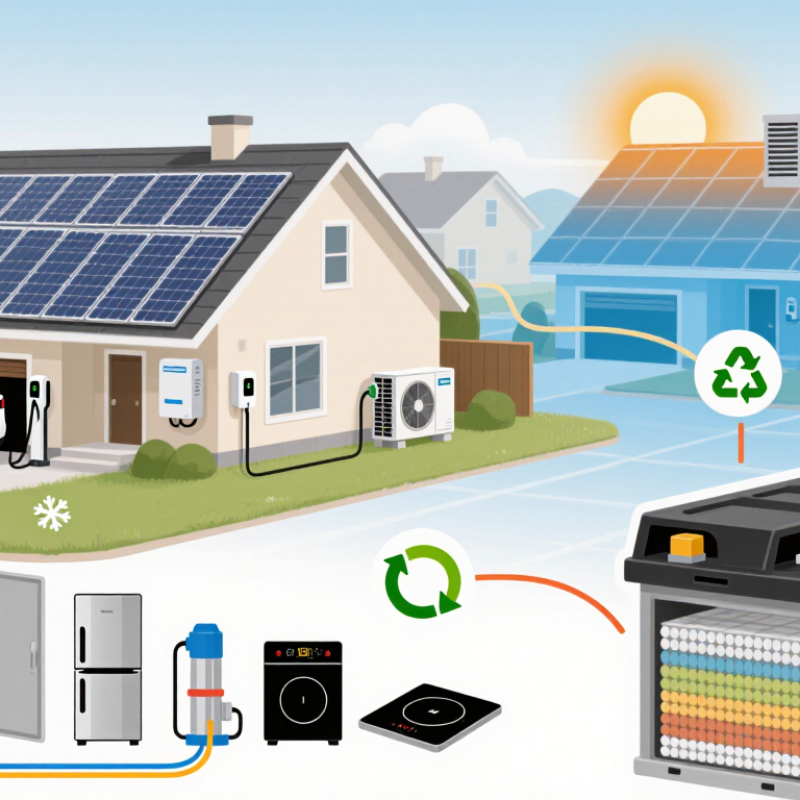
A solar battery stores surplus daytime electricity for later use, rather than making additional energy. In a home energy system, rooftop panels serve current household demand first; excess power can charge the battery. After sunset, stored energy can run selected circuits or reduce electricity drawn from the grid. During an outage, backup is available only if the system is designed to operate independently of the grid. That is the point. Battery capacity, measured in kilowatt-hours, describes how much energy it can hold; power, measured in kilowatts, limits how many appliances it can run at once.
Sizing starts with actual use, not a generic household average. The U.S. Energy Information Administration reported average residential electricity consumption of 10,791 kilowatt-hours per home in 2020, or about 29.6 kilowatt-hours daily. A household’s evening load may be far smaller—or not. Refrigerators, lights, and a medical device have different priorities from electric heating or a car charger. NREL’s 2024 Annual Technology Baseline uses 85% round-trip efficiency for modeled utility-scale lithium-ion storage; residential equipment varies, so treat that figure as context, not a guarantee. Check usable capacity, backup power, and expected efficiency against your bills and outage needs. A neat spreadsheet can still miss a cold evening and an unexpectedly busy kitchen. Real homes vary.
How to Choose Solar Battery Storage in 2026
Estimated backup time varies with usable battery capacity and the power demand of the appliances you run. This example assumes a steady 1.5 kW essential load; actual results depend on your home’s usage and system settings.
How to read this: Estimated hours are calculated as usable battery capacity (kWh) divided by load (kW). For example, 10 kWh ÷ 1.5 kW is about 6.7 hours. These estimates exclude inverter losses, reserve capacity, appliance startup surges, and solar recharging. Compare usable capacity—not just the battery’s stated total capacity—with your household’s backup needs.
Assessing Your Energy Needs, Solar Output, and Storage Goals
How to Choose Solar Battery Storage in 2026?
Assessing Your Energy Needs, Solar Output, and Storage Goals
Choosing solar battery storage in 2026 starts with your household’s actual energy pattern, not advertised capacity. Review twelve months of electricity bills and mark your highest-use hours. Then inspect daily habits. Cooking, water heating, cooling, and electric vehicle charging can change demand sharply. Your evening load matters most. Measure it. A home using power after sunset needs a different system from one exporting energy at noon.
Solar output also needs careful checking. Use recent production records, roof orientation, seasonal shading, and local weather data. A larger battery cannot fix weak winter generation. Compare daytime solar production with your daytime consumption. If much energy already serves the home directly, a smaller battery may provide better value. My first estimates are often too generous because cloudy weeks are easy to underestimate.
Define the storage goal before requesting quotes. Backup power requires essential circuits, starting loads, and an outage duration target. Bill reduction focuses more on shifting solar energy into evening hours. A battery’s usable capacity differs from its headline rating. Round-trip efficiency and degradation also affect real savings. Leave room for imperfect forecasts. Ask installers for written calculations, safety certifications, warranty terms, maintenance requirements, and local approval details. One overlooked issue is battery placement; a hot, poorly ventilated area can affect performance and service life.
Comparing Battery Types, Capacity, Power, and Usable Energy
How to Choose Solar Battery Storage in 2026?
Comparing Battery Types, Capacity, Power, and Usable Energy
In 2026, battery selection should start with your evening load, not the advertised storage figure. Lithium iron phosphate batteries generally offer strong cycle life, stable thermal performance, and high usable capacity. Lead-acid systems can cost less initially, but their recommended depth of discharge is usually lower. That difference matters when a refrigerator, pump, and lights run after sunset. During site assessments, record hourly consumption for several days, including cloudy periods. One day is rarely representative.
Capacity is measured in kilowatt-hours, while power is measured in kilowatts. A 10 kWh battery may not run a 5 kW cooker and pump together. Check continuous power, surge power, and inverter limits before choosing capacity. Usable energy is the stored energy available after discharge limits and conversion losses. Round-trip efficiency also affects real savings; a lower figure means more solar energy is needed. Allow space for degradation. A battery delivering 90% today may provide less after years of cycling.
Tips: Match battery power to your peak household load, then size capacity for the hours you need. Ask for usable, not nominal, kWh. Request test conditions, warranty assumptions, temperature limits, and shutdown details from a qualified installer. Do not oversize automatically; unused capacity can weaken the economics. I have seen estimates fail because future electric heating was assumed but never installed. Recheck your assumptions.
How to Choose Solar Battery Storage in 2026? — Comparing Battery Types, Capacity, Power, and Usable Energy
Typical characteristics of battery chemistries used or considered for stationary solar storage. Figures are indicative; product specifications and operating conditions vary.
| Battery Type |
Typical Usable Depth of Discharge |
Typical Round-Trip Efficiency |
Typical Cycle-Life Range |
Capacity and Power Considerations |
Best-Fit Use |
Key Trade-Off |
| Lithium iron phosphate (LFP) |
About 80–100% of rated capacity, depending on manufacturer limits and warranty terms |
About 90–95% at the battery-system level |
Often approximately 3,000–6,000 cycles to a specified remaining-capacity threshold |
Modular systems commonly range from a few kWh to tens of kWh. Power output depends on the inverter and battery configuration, not chemistry alone. |
Daily home solar shifting, backup, and frequent cycling |
Generally strong cycle life and thermal stability; usable output and cold-weather charging can be limited by system controls and temperature. |
| NMC lithium-ion |
Often about 80–90% of rated capacity under normal operating settings |
About 90–95% at the battery-system level |
Often approximately 2,000–4,000 cycles to a specified remaining-capacity threshold |
Can provide high power in a compact package. Check both continuous and peak power ratings as well as usable kWh. |
Installations where compact size or high power density is important |
High energy density; thermal management and certified installation are important, and cycle life varies with temperature and charging practices. |
| Lead-acid (flooded or sealed) |
Commonly about 50% for longer service life; deeper discharge may be permitted but can shorten life |
About 70–85% at the battery-system level |
Often approximately 500–1,500 cycles, depending strongly on type, discharge depth, and maintenance |
Nominal capacity may need to be substantially larger to deliver the desired usable energy. Verify capacity ratings at the intended discharge rate. |
Budget-sensitive or occasional backup applications |
Lower upfront cost in some cases; typically heavier, less efficient, and shorter-lived for frequent deep cycling. |
| Flow battery (for example, vanadium redox) |
Often designed for deep discharge; actual usable fraction depends on system design |
Approximately 65–85% at the system level, depending on design and operating conditions |
Can support many thousands of cycles; lifetime is highly system- and maintenance-dependent |
Energy capacity and power are often sized separately, which can suit longer-duration storage. Systems are generally larger than residential lithium-ion units. |
Long-duration or larger stationary storage where space is available |
Potentially long cycle life and flexible energy scaling; higher complexity, footprint, and limited residential availability. |
Capacity vs. usable energy: Nominal capacity is the battery’s rated energy in kWh. Usable energy is the portion available within the system’s discharge limits. As a simple estimate, a 10 kWh battery operated to 90% depth of discharge provides about 9 kWh before conversion losses; AC-delivered energy can be lower. Round-trip efficiency describes energy returned after a charge–discharge cycle.
How to size a system: Match usable kWh to the energy you need during the intended backup period, and match continuous kW to the loads that may run simultaneously. Check surge power for motors, the inverter rating, temperature limits, warranty conditions, and whether the quoted capacity is nominal or usable. Performance figures above are broad industry ranges, not guarantees for an individual product.
Evaluating Installation Requirements, Safety, Lifespan, and Warranty
How to Choose Solar Battery Storage in 2026?
Evaluating Installation Requirements, Safety, Lifespan, and Warranty
Before choosing a solar battery, check where it can be installed. A garage wall may seem convenient, but clearance, ventilation, temperature, and access for maintenance all matter. Ask a qualified installer to inspect the electrical panel, inverter compatibility, and available space. Request a written estimate that lists any panel upgrades or wiring changes. Small details can shift the final cost.
Tips: Measure the proposed space and photograph the electrical panel before your consultation. Ask how the system shuts down during an outage, and where its disconnect switch will sit. Clear answers matter.
Safety features deserve more than a quick glance. Review the installation manual, monitoring options, and maintenance requirements. Battery lifespan depends on operating conditions and how often it cycles; advertised figures are not a promise for every home. I would compare the warranty’s years, capacity-retention threshold, and exclusions, then ask who handles service if performance falls short. Read the fine print. Some terms are easy to overlook, and I would not assume a long warranty covers every repair. A careful comparison can reveal whether the system suits your usage, site, and budget.
Calculating Costs, Savings, Incentives, and Long-Term Value in 2026
Choosing solar battery storage in 2026 requires more than comparing quoted prices. BloombergNEF reported an average lithium-ion pack price of $139 per kWh in 2023, a 14% annual decline. Installed household systems still cost more because they include inverters, labor, permits, and safety equipment. Request an itemized quote. A useful first calculation is usable capacity × annual cycles × years. For example, a 10 kWh battery operating through 300 cycles yearly could deliver about 45,000 kWh over 15 years, before degradation and operating losses.
Savings depend on your tariff, not battery size alone. If stored solar replaces electricity priced at $0.30 per kWh, while charging would otherwise use grid power at $0.12, the gross spread is $0.18. A 10 kWh system with 90% usable capacity might produce roughly $7,300 in gross energy savings across 15 years. That is only an illustration. Export limits, cloudy weeks, and changing tariffs can reduce it sharply. I would not promise a seven-year payback without twelve months of interval consumption data.
Incentives can change the calculation. In the United States, eligible standalone storage may receive a federal tax credit, subject to current rules and project requirements; local programs vary widely. Check official tax guidance before subtracting any incentive. Lazard’s Levelized Cost of Storage Analysis, Version 10.0, shows utility-scale storage costs remain highly site-dependent. Residential economics are even less predictable. Include replacement risk, warranty limits, round-trip efficiency, and capacity fade. The cheapest quote may age poorly. My earlier mistake was treating backup value as zero; keeping lights on during a three-hour outage has real household value, even when spreadsheets cannot price it neatly.