How to Choose the Best Solar Solutions for Your Home?
As the shift towards renewable energy grows, solar solutions can significantly benefit homeowners. Expert Sarah Johnson, a leading figure in the solar industry, states, "Choosing the right solar solution is crucial for maximizing efficiency and savings." This sentiment resonates with many as they navigate the complex landscape of available options.
Finding the best solar solutions involves considering several factors, such as energy needs, roof space, and local climate. Homeowners often struggle with the technical details. Some may feel overwhelmed by the variety of panels and configurations. It’s essential to understand each option's potential advantages and disadvantages to make an informed decision.
Moreover, not every solution fits every home. There might be a perfect match out there, but discovering it requires research and reflection. Many homeowners find the process daunting. Engaging with experts, like Sarah Johnson, can clarify confusing terms and lead to the best solar solution for individual needs. Balancing practicality with aspirations can be challenging, yet it's a rewarding journey towards sustainable living.

Understanding Solar Energy: Basics and Benefits
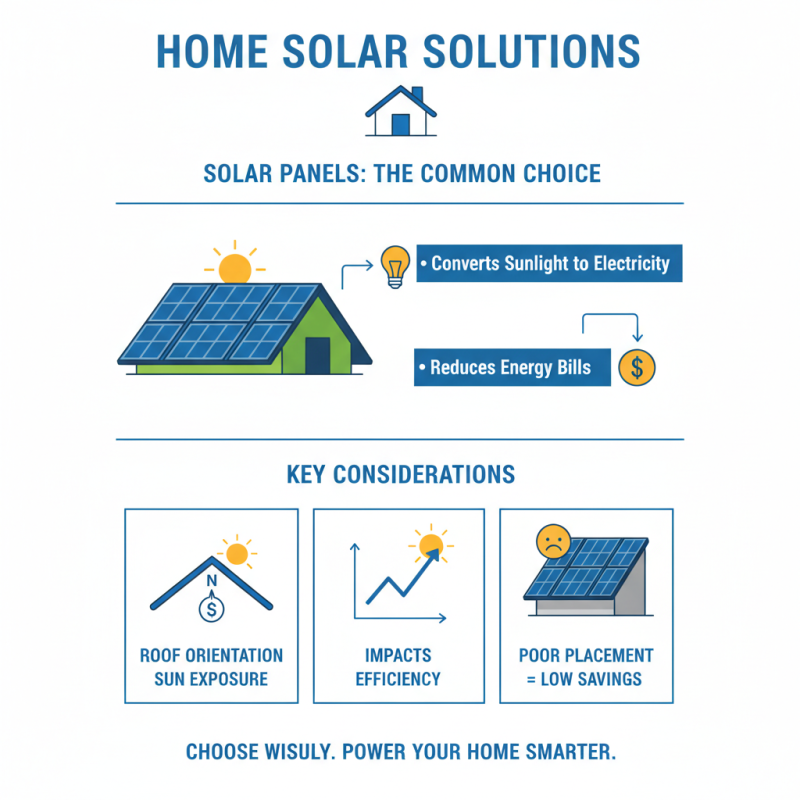
Solar energy has become a popular choice for homeowners. It harnesses sunlight to generate electricity. This process is clean and sustainable. Installing solar panels can significantly reduce energy bills. Many people appreciate the environmental benefits too. Using solar power can lead to lower carbon footprints.
Understanding solar energy is essential before installation. Different types of solar solutions exist. Each has its advantages and disadvantages. For instance, photovoltaic panels convert sunlight directly into electricity. On the other hand, solar thermal systems capture heat from the sun. Consider factors such as your home’s location and energy needs. These factors will affect which solution suits you best.
Some may find solar installation daunting. There are many options and technical details to grasp. Picking the right system can feel overwhelming. It's important to weigh costs versus potential savings. Sometimes, expectations do not match reality. Not all roofs are ideal for solar panels. Reflection on these details can help make a better decision.
Assessing Your Home's Solar Potential and Energy Needs
When assessing your home's solar potential, start with an evaluation of sunlight exposure. Look at your roof. Is it shading? Trees or nearby buildings can block sunlight. This affects energy production. Ideally, choose a location with direct sunlight for most of the day.
Next, consider your energy needs. Review past electricity bills to understand usage patterns. Do you have high energy-consuming appliances? This may indicate a larger solar installation is necessary. Assessing your typical usage helps you choose the right system size.
Sometimes, less is more. You might not need the largest solution. Small systems can still meet modest energy requirements. Reflect on what you truly need, rather than going for excess. Understanding your potential cuts costs and avoids oversizing your investment.
Assessing Your Home's Solar Potential and Energy Needs
Evaluating Solar Providers: Key Factors and Questions
Choosing the right solar provider can be overwhelming. It's essential to evaluate several key factors to ensure you make an informed decision. A recent report from the Solar Energy Industries Association (SEIA) states that installation quality significantly impacts system performance. Homeowners should assess warranties offered by providers. A 25-year warranty is often the industry standard, indicating confidence in the system’s longevity.
When evaluating solar companies, ask about their installation experience and customer reviews. Research shows that companies with a minimum of five years in the industry tend to deliver better results. You should also consider their certifications and training. Providers certified by the North American Board of Certified Energy Practitioners (NABCEP) typically meet higher standards.
Pricing is another crucial aspect. Many homeowners are surprised by hidden fees that increase the total cost. Always request a detailed breakdown of quotes. A 2022 report noted that around 30% of solar installations experienced unexpected costs. Transparent pricing can prevent future frustrations and ensure you’re getting the best value. It’s vital to communicate your expectations clearly and voice any concerns during the selection process.
How to Choose the Best Solar Solutions for Your Home? - Evaluating Solar Providers: Key Factors and Questions
| Factor |
Description |
Importance Rating (1-5) |
Questions to Ask |
| Experience |
Years in business and number of installations completed. |
5 |
How many solar systems have you installed? |
| Certifications |
Relevant licenses and certifications held by the provider. |
4 |
What certifications do your technicians possess? |
| Warranties |
Details on system and workmanship warranties offered. |
5 |
What warranties do you provide for the equipment and installation? |
| Customer Service |
Quality of support before and after installation. |
5 |
How do you handle customer inquiries and complaints? |
| Financing Options |
Availability of various financing plans and incentives. |
4 |
What financing options are available for solar installations? |
| Quality of Equipment |
Brands and specifications of panels and inverters used. |
5 |
What brands and types of solar panels do you install? |
| Local Knowledge |
Familiarity with local regulations and incentives. |
3 |
How well do you know the local solar incentives and regulations? |
Financial Incentives and Cost Considerations for Solar Installations
When considering solar solutions, financial incentives play a crucial role. Many homeowners overlook available state and federal tax credits. For instance, the Federal Investment Tax Credit (ITC) offers a 26% credit through 2022, potentially reducing your solar installation costs significantly. This incentive can lead to savings of thousands of dollars, depending on your system's size.
Cost considerations extend beyond initial prices. Homeowners should assess monthly utility savings, which can average $100 or more. A report from the National Renewable Energy Laboratory (NREL) estimates that solar installations can save homeowners up to $20,000 over 20 years. However, not all regions offer equal incentives or savings. In areas with lower sunlight exposure, payback periods may extend, making the investment feel less appealing.
Financing options are another critical aspect. Many companies provide zero-down leasing and power purchase agreements. These arrangements can make solar more accessible, but homeowners must weigh long-term costs against short-term savings. Some may find themselves disappointed if they fail to understand the total investment versus financial returns. Understanding the fine details of contracts and potential hidden fees is vital. Choosing solar energy requires thoughtful consideration of these financial incentives and cost dynamics.