2026 Top Solar Contractors What You Need to Know?
As the solar industry continues to grow, understanding the roles of solar contractors becomes essential. These professionals are at the forefront of harnessing the sun's energy. They install and maintain solar systems that power homes and businesses. In 2026, the demand for skilled solar contractors is expected to rise significantly.
Choosing a solar contractor requires careful consideration. It's crucial to evaluate their experience, customer reviews, and certifications. Not all solar contractors deliver the same quality of service. Some may promise low prices but cut corners. This can lead to future issues and dissatisfaction.
The evolving technology in solar energy presents both opportunities and challenges. Contractors must stay updated with the latest advancements. This can be a daunting task. Yet, understanding what to look for in a contractor can make a difference. It ensures you receive the best service and value. Embrace the solar revolution, but choose your contractor wisely.

Overview of 2026 Top Solar Contractors Industry
The solar industry is evolving rapidly. By 2026, we anticipate a diverse mix of contractors providing innovative solutions. The growth is fueled by increased demand for renewable energy. Many contractors focus on residential and commercial installations, adapting to local regulations. This adaptability is crucial for success.
Tips: Research local incentives for solar projects. These can significantly reduce installation costs. Understand the installation process well. Many contractors may have varying approaches and timelines, leading to unexpected delays.
The competition among contractors will intensify. Some might offer attractive financing options. However, not every offer will be beneficial. Always evaluate the long-term savings versus upfront costs. Some contractors may overpromise and underdeliver, creating frustration. This reality highlights the importance of thorough vetting.
Tips: Ask for references or reviews before committing. A solid reputation often indicates reliability. Comparing quotes from multiple contractors can help identify the best value. Pay attention to warranty offers, as they reflect the contractor's confidence in their work.
2026 Top Solar Contractors Overview
This chart illustrates the distribution of market share among various segments in the solar contracting industry for 2026. The data highlights the progressive growth in the residential solar sector compared to commercial and utility-scale installations.
Key Factors in Selecting a Solar Contractor
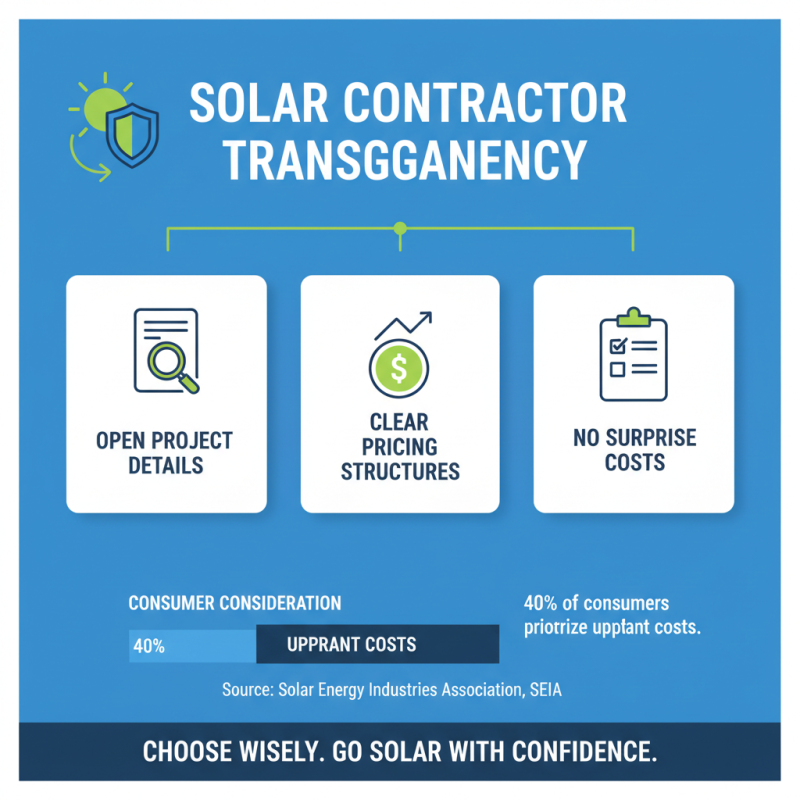
When selecting a solar contractor, transparency is crucial. Look for contractors who openly share project details and pricing structures. According to the Solar Energy Industries Association (SEIA), over 40% of consumers consider upfront costs a major factor. Clarity in costs helps prevent surprises later.
Experience matters, too. Contractors with a solid history often have better performance. A report from the National Renewable Energy Laboratory shows that more experienced companies can reduce installation times by 20%. However, don’t just rely on years in business. Check customer reviews and portfolios to gauge reliability.
Quality of materials cannot be overlooked. Top-tier contractors may use higher grade equipment, which can enhance system efficiency. The level of warranty offered can also indicate quality. Some provide up to 25 years, showing confidence in their installations. Yet, be cautious—long warranties aren’t always synonymous with quality. Understanding what's included can save you from future headaches.
Trends Impacting the Solar Contractor Landscape in 2026
As the solar industry rapidly evolves, several key trends are reshaping the contractor landscape in 2026. According to a recent market analysis, solar installations are expected to grow by 25% this year, driven by widespread adoption of solar energy. Yet, many contractors face hurdles like supply chain interruptions and a shifting regulatory environment. These challenges require firms to adapt quickly to meet rising demand.
The workforce remains a crucial issue. A survey reported that 70% of solar companies struggle to find skilled labor. This gap may hinder project timelines and efficiency. Additionally, the transition to digital tools for project management is not universal. While many firms embrace technology, others lag, risking competitive disadvantage. Effective training programs and technology investments could help bridge this gap.
Customer expectations are also evolving. Data indicates that 68% of consumers now prioritize sustainability in their purchasing decisions. Contractors must understand these shifts to stay relevant. Focusing solely on installation won't suffice. They need to provide comprehensive service, including energy efficiency consultations and maintenance plans. Meeting these demands is essential for long-term success.
Regulatory and Incentive Changes Affecting Solar Contractors
Regulatory changes are reshaping the solar industry. Federal incentives have played a pivotal role in solar adoption. In fact, a recent report indicated that 40% of solar growth can be attributed to incentives. This trend is not guaranteed to stay. As legislation evolves, contractors face uncertainty.
Local and state policies also affect solar contractors. Some regions are reducing tax credits and rebates. For instance, California is winding down certain tax benefits. Such actions may lead to a slowdown in installations. Contractors must adapt to these changes quickly or risk losing market share.
Understanding the regulatory climate is essential. It's imperative to track these changes closely. In some cases, contractors may find themselves grappling with unexpected financial burdens. An unforeseen policy change can disrupt existing project plans. Contractors need strategies to navigate these complex waters. The future of solar depends not just on technology, but on regulatory responsiveness.
Future Outlook for Solar Contractors Beyond 2026
The solar industry is evolving rapidly. By 2026, the demand for solar contractors will likely continue to surge. Contractors must adapt to these changes to thrive. The shift towards more sustainable energy sources presents both opportunities and challenges.
One crucial aspect is the need for continuous learning. Stay updated on new technologies and regulations. Attend workshops and seminars whenever possible. Engage with industry professionals to share insights and strategies. This will help build a robust knowledge base.
Consider diversifying your services. Explore energy storage options or maintenance contracts. Clients may appreciate a one-stop shop for their solar needs.
Also, focus on customer service. Satisfied clients can lead to referrals. Ensure your team is well trained in communication skills. The human element cannot be overlooked.
Reflect on market competition. As the solar landscape grows, many players will enter. Analyze local competitors regularly. Understand their strengths and weaknesses. This insight can provide a competitive edge. Embrace feedback, both positive and negative. It’s essential for growth.